The week of March 11 is recognized as Sunshine Week by the newspaper industry and the S.C. Press Association. It's also a good time for local elected leaders to highlight their own open government and transparency efforts.
The special section in the March issue of Uptown focuses on open government with feature stories spotlighting changes to the Freedom of Information Act, streaming council meetings and public access to digital records.
Cities of all sizes are working hard to increase access to public meetings and public records. Streaming of public meetings and digitizing of public records are
becoming increasingly common - and much less expensive to produce. Uptown articles spotlight cities that are taking the lead to make sure their residents have
easy access to their city government activities.
Legislation that passed in 2017 made substantial changes to the Freedom of Information Act. Changes addressed digital records, charges for copies, updating timing requirements, and the option for cities to seek court guidance on unduly broad or repetitive requests.
Another aspect of the 2017 FOIA legislation is changes to the Family Privacy Protection Act. Previously, it was
illegal for an individual to get from a state agency any personal information that would be used for commercial solicitation. But now,
the law expands that offense to include local governments. That means municipalities must not only provide notice of
the prohibition to requesting parties but must also take steps to ensure
that no individual or entity "obtains or distributes" this information
for commercial solicitation. Read the article to learn more about what cities can do to protect residents' privacy.
City Connect is the blog of the Municipal Association of SC connecting officials in the state’s 271 cities and towns with the resources and tools they need to provide efficient and cost-effective services to residents and businesses.
Thursday, March 8, 2018
Thursday, February 22, 2018
S.C. Dept. of Commerce accepting nominations for Opportunity Zones for low income areas
By Commerce Secretary Bobby Hitt
On behalf of Governor Henry McMaster, the S.C. Department of
Commerce is pleased to announce that we will accept census tract nominations for
the recently announced economic development program called Opportunity Zones.
As a part of the Tax Cuts and Jobs Act of 2017, Opportunity Zones are designed
to encourage long-term private investments in low-income communities.This program provides a federal tax incentive for taxpayers
who reinvest unrealized capital gains into “Opportunity Funds,” which are
specialized vehicles dedicated to investing in low-income areas called
“Opportunity Zones.”
The zones themselves are to be comprised of Low-Income
Community census tracts and designated by governors in every state. South Carolina may designate 25 percent of qualifying census
tracts as an Opportunity Zone.
Please note that Qualifying Zones are based on
the 2011-2015 American Community Survey. Please click here to view a map of the census tracts.
CENSUS TRACT
QUALIFICATION
To qualify, a census tract must satisfy the definition of
“low-income community," to be nominated by the Governor and approved by the U.S.
Treasury.
·
Census tracts qualify as an LIC if they are
considered distressed or severely distressed:
o
Distressed:
§
Poverty rate of 20 percent or greater
§
Median family income of 80 percent or less than
the statewide median family income if located outside of a metropolitan area
§
Median family income of 80 percent or less than the
statewide median family income or the metropolitan area median family income,
whichever is higher
o
Severely Distressed:
§
Poverty rate of 30 percent or greater
§
Median family income of 60 percent or less of
the area’s median family income
§
Unemployment of at least 1.5 times the national
average of 8.3 percent (for the 2011-2015 ACS)
Currently, South Carolina has 534 census tracts that qualify.
As a result, up to 25 percent of those tracts (134) are eligible to be
nominated by the Governor. The Opportunity Zone designations remain in effect
for 10 years.
HOW TO NOMINATE A
CENSUS TRACT
If communities wish to nominate a census tract in their community
for selection as an Opportunity Zone, please provide the census tract number,
your contact information and a written description of why your community thinks
an Opportunity Fund (private investment) would invest in this census tract.
Provide examples of projects or potential projects within the census tract. Your
census tract submission should include a balance of need and opportunity. Items
for consideration are an area’s absorptive capacity for new capital,
habitability for local entrepreneurs, and connection to markets, population
centers, and anchor institutions that can play a critical role in facilitating
growth in distressed locales.
Your submission should be no longer than one page per census tract. If a community is requesting more than one tract, then the community MUST rank their census tracts in order of preference to be nominated as Opportunity Zones for South Carolina.
We are accepting submissions from only one official
county, city or municipal representative of your local area. Nominations
should be submitted by emailing your census tract nominations to OpportunityZones@sccommerce.com
by 5 p.m. on Thursday, March 1.
Any questions concerning this nomination
process should be made in writing to this same email address. To view a copy of the congressional bill please click here.
Thursday, February 15, 2018
Stay in the State House loop with social media reports
This week, Scott Slatton (@ScottMuniSC) shared a series of tweets live from a House Education and Public Works committee meeting where members voted out the utility relocation bill.
Last week, the legislative team and lots of local officials' Twitter posts included live reports from sessions at Hometown Legislative Action Day and the Municipal Elected Officials Institute advocacy class.
Councilmember Jenn Hulehan (@Jenn4ward3) from Simpsonville kept her constituents on top of everything she learned with tweets from a State House tour and other HLAD sessions.
| One of the take-aways from the MEO Institute advocacy class |
Cayce Mayor Elise Partin (@elisepartin), president of the Municipal Association, made sure to keep her constituents stayed informed about what was happening during Hometown Legislative Action Day with lots of retweets from panel sessions, the MEO Institute graduation and Agriculture Commissioner Hugh Weathers' (@HughWeathers) lunch speech.
Each week, the Association's legislative report, From the Dome to Your Dome, is shared frequently through the Association's and the lobbyists' Twitter accounts. With more than 5,000 followers between these four accounts, local officials, legislators, reporters, hometown residents, business leaders and partner organizations all over the state have the benefit of staying on top of issues important to cities and towns.
Want to stay in the loop? Make sure to follow @MuniAssnSC, @TigerMuniSC, @MelissaMuniSC and @ScottMuniSC.
Tuesday, February 13, 2018
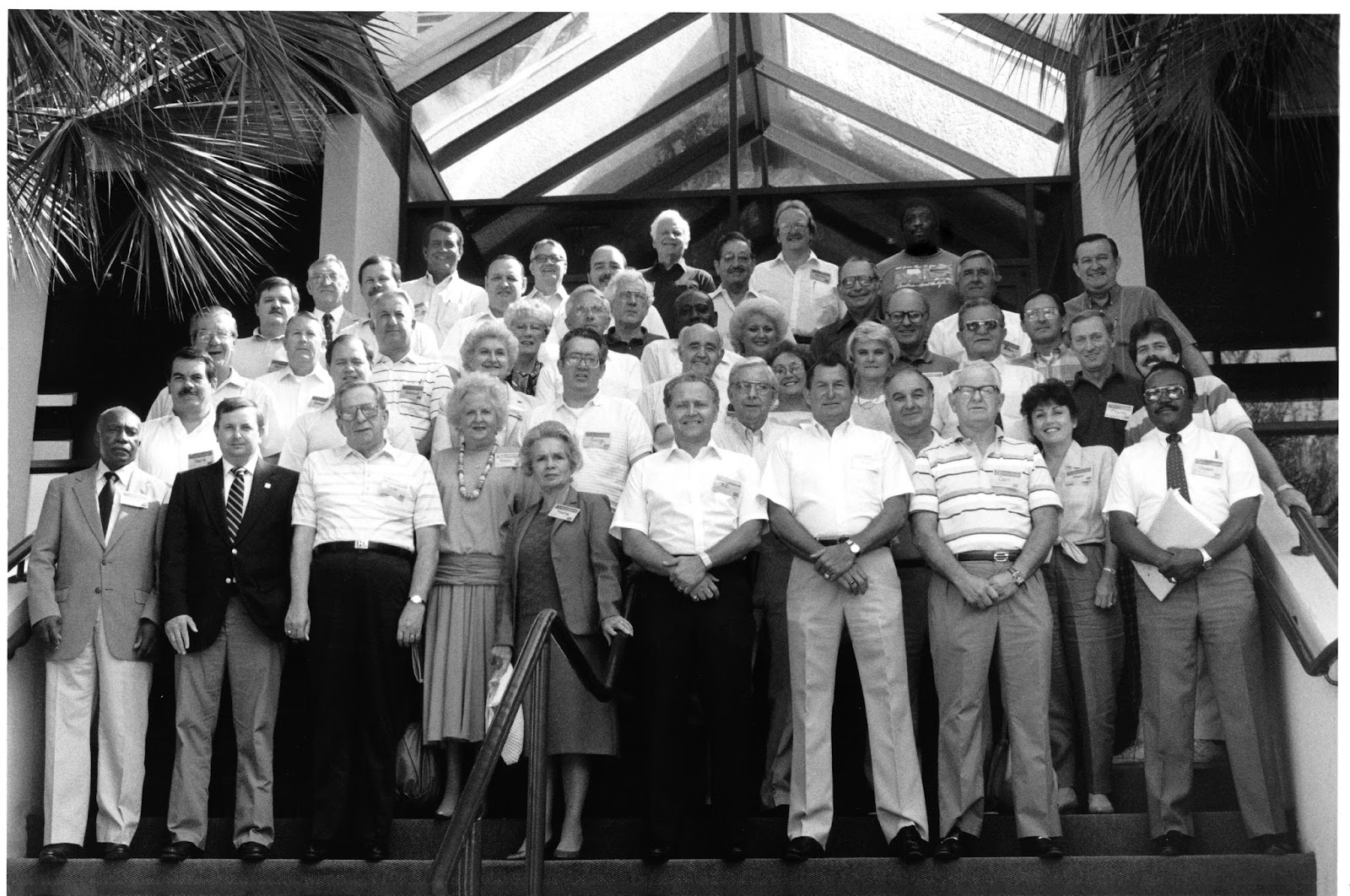
Celebrating 30 years of Municipal Elected Officials Institute graduates
A movie ticket was $3.50. The winter Olympics took place in Calgary, Canada, and The Wonder Years debuted on ABC-TV. This was 1988 - also the year that the Municipal Elected Officials Institute of Government graduated its first class.
Technology, transportation, downtown development and delivery of public services have changed substantially over the past 30 years. One thing that hasn't changed is the need for newly elected city council members to get the training they need in the complexities of local government.
This year, the Municipal Elected Officials Institute is celebrating 30 years of graduates.
For anyone elected to serve as a mayor
or member of a city council in South Carolina, the Municipal Association of South Carolina offers a variety of training opportunities that give local
elected leaders the tools they need to make a seamless transition from candidate to elected official. The Municipal Elected Officials Institute is a multi-faceted
training program designed specifically for mayors and city councilmembers. The
Advanced Institute is available to graduates seeking additional
training.
Immediately upon election, mayors and councilmembers can enroll in a free online course that covers five basics of governing - effective leadership, the fundamentals of city services and forms of government, basic budget requirements, effective meeting and agenda procedures, and the Freedom of Information Act and Ethics Act. This course is available on-demand through the Municipal Association’s website.
Once sworn into office, mayors and councilmembers can enroll in the Municipal Elected Officials Institute. The entire curriculum of 14 classes can be completed in one year through a combination of two day-long sessions and five streamed or online classes. The Institute uses local government experts, attorneys, business leaders, higher education instructors, and municipal government and Municipal Association staff to teach the sessions.
At the day-long sessions offered each
February, topics include conducting public meetings, ethics and public
accountability, planning and zoning, and business license administration.
The classes streamed to the councils of governments give local leaders a chance to get training three times a year without having to travel to Columbia. Plus they get the added advantage of networking and brainstorming time with peers in their region. To meet the goal of more flexibility in training, the online version of these classes are offered on-demand through the Municipal Association’s website.
During these streamed and online sessions, elected officials learn from leaders in both the private and public sectors about the importance of partnerships in economic development. They hear from staff with the Municipal Association and the SC Press Association about complying with the Freedom of Information Act. They learn how the three forms of government affect how a city is run and the mechanics and legalities of the municipal budget.
Time availability to attend training
can be an issue for elected officials who often have full-time jobs outside of
their council responsibilities. “We know that municipal elected officials have
many responsibilities and time commitments, so the time dedicated to training
must be well spent," said Wayne George, executive director of the Municipal
Association.
George, mayor of Mullins, S.C. from 1988 - 2004 and a 1991 Institute graduate, was the first official from a city in Marion County to graduate from the Institute.
Technology, transportation, downtown development and delivery of public services have changed substantially over the past 30 years. One thing that hasn't changed is the need for newly elected city council members to get the training they need in the complexities of local government.
This year, the Municipal Elected Officials Institute is celebrating 30 years of graduates.
![]() |
| First graduating class of the MEO Institute in 1988 |
More than 1,600 local
officials have completed the MEO Institute since 1988. This year, there are eight cities with councils that can count 100 percent of their members as MEO Institute graduates:
- Blackville
- Gray Court
- Greer
- Hampton
- Hollywood
- Inman
- Pendleton
- Wellford
“People who run for elected office
have a real passion and love for their communities.But when campaigning turns to
governing, it’s kind of like starting a new job,” said Cayce Mayor Elise
Partin, president of the Municipal Association. Partin graduated from the Institute in 2010.
“Most of us come to our roles in municipal service from professions and walks of life that might not have trained us on the mechanics of local government. And that’s great, because of diversity of experiences makes us better leaders, but we need to be prepared to lead our cities and towns too."
Immediately upon election, mayors and councilmembers can enroll in a free online course that covers five basics of governing - effective leadership, the fundamentals of city services and forms of government, basic budget requirements, effective meeting and agenda procedures, and the Freedom of Information Act and Ethics Act. This course is available on-demand through the Municipal Association’s website.
Once sworn into office, mayors and councilmembers can enroll in the Municipal Elected Officials Institute. The entire curriculum of 14 classes can be completed in one year through a combination of two day-long sessions and five streamed or online classes. The Institute uses local government experts, attorneys, business leaders, higher education instructors, and municipal government and Municipal Association staff to teach the sessions.
![]() |
| Winter 2018 MEO Institute graduates who were recognized on Feb. 6 |
The classes streamed to the councils of governments give local leaders a chance to get training three times a year without having to travel to Columbia. Plus they get the added advantage of networking and brainstorming time with peers in their region. To meet the goal of more flexibility in training, the online version of these classes are offered on-demand through the Municipal Association’s website.
During these streamed and online sessions, elected officials learn from leaders in both the private and public sectors about the importance of partnerships in economic development. They hear from staff with the Municipal Association and the SC Press Association about complying with the Freedom of Information Act. They learn how the three forms of government affect how a city is run and the mechanics and legalities of the municipal budget.
For graduates of the Municipal Elected
Officials Institute, the Advanced Municipal Elected Officials Institute is available to give local officials more in-depth training on
certain topics. Advanced Institute participants can choose between two
advanced courses offered each winter and fall with the
requirement of taking four of the six available classes to graduate. Launched
in 2016, the Advanced Institute already has more than 150 graduates.
![]() |
| Advanced MEO Institute graduates were recogized on Feb. 6 |
George, mayor of Mullins, S.C. from 1988 - 2004 and a 1991 Institute graduate, was the first official from a city in Marion County to graduate from the Institute.
“We have tried to design a flexible training program that meets both
the goals of gaining technical knowledge and sharing best practices with their
peers in other cities,” George said.
Wednesday, January 17, 2018
Changes to the Local Government Fund Considered
The Local Government Fund has been an important and stable source of local government revenue for almost 20 years. Since Fiscal Year 2010, the LGF has seen substantial reductions due to a shrinking state general fund and additional reductions imposed by the General Assembly.
In recent years, members of the General Assembly have been considering changes to the LGF and evaluating how the Local Government Fund is calculated for distribution to cities and counties.
Last fall, the Speaker of the House appointed an ad committee chaired by Rep. Leon Stavranakis to review the revenue needs of municipalities and counties, and modify the current funding methodology of the LGF.
During its two meetings in late 2017, committee members heard testimony from Melissa Carter with the Municipal Association, other local government interests and Frank Rainwater, the state’s chief economist, to gather input about local government revenue and expenditure trends.
Last week, state budget hearings began with a Ways and Means subcommittee taking testimony about county and municipal requests for funding.
In the 2017 session, Rep. Russell Ott introduced H3099 that changes the formula to reflect the projected growth in the general fund.
Assuring the future of the LGF as a stable and reliable revenue source is one of the Municipal Association’s Advocacy Initiatives for 2018. At Hometown Legislative Action Day on February 6, hear from a panel of House members who will discuss proposals being considered to update the LGF formula.
Read From the Dome to your Home every Friday to keep up with the debate surrounding changes in the LGF. Learn more about the history of the LGF.
In recent years, members of the General Assembly have been considering changes to the LGF and evaluating how the Local Government Fund is calculated for distribution to cities and counties.
Last fall, the Speaker of the House appointed an ad committee chaired by Rep. Leon Stavranakis to review the revenue needs of municipalities and counties, and modify the current funding methodology of the LGF.
During its two meetings in late 2017, committee members heard testimony from Melissa Carter with the Municipal Association, other local government interests and Frank Rainwater, the state’s chief economist, to gather input about local government revenue and expenditure trends.
Last week, state budget hearings began with a Ways and Means subcommittee taking testimony about county and municipal requests for funding.
In the 2017 session, Rep. Russell Ott introduced H3099 that changes the formula to reflect the projected growth in the general fund.
Assuring the future of the LGF as a stable and reliable revenue source is one of the Municipal Association’s Advocacy Initiatives for 2018. At Hometown Legislative Action Day on February 6, hear from a panel of House members who will discuss proposals being considered to update the LGF formula.
Tuesday, January 2, 2018
Meet the Municipal Association's new executive director
The new executive director of
the Municipal Association of South Carolina is Wayne George, a
former mayor, city councilmember and state legislator. The Association
represents the state's 271 cities and towns, providing training, advocacy at
the state and federal levels, and programs that give local officials the tools
they need to provide quality services.
George was mayor of Mullins for 16 years after serving on city council from 1980 to 1988. "Generally, you can see light at the end of the tunnel. At the state level, sometimes you can't see things progressing as you'd like it to."
But, of course, it's not easy making decisions that affect the lives of your next-door neighbors and the people you see at church, the grocery store and your children's school.
Local governments, George said, "are sometimes not completely understood by the general public. But we are the government that's closest to the people."
George succeeds Miriam Hair who retired in December after 32 years with the Association, the last nine as executive director.
"Wayne's background in local government, experience at the State House, organizational experience as a successful business owner, and years of involvement with the Municipal Association on staff and on the board made him the ideal candidate for executive director," said Cayce Mayor Elise Partin, who chairs the Association's board. "His dedication to the strength of local government, which increases the strength of our state, will continue the positive difference the Association makes."
Before joining the Association, George had a career in insurance after founding his own company. He also worked in the Municipal Association's Risk Management Services division and as a field service representative for the Association from 2004 to 2010. Later, George represented parts of Dillon, Horry and Marion counties in the S.C. House of Representatives for two terms after his election in 2012.
George is particularly attuned to the challenges that rural cities and towns in South Carolina face. In 2004, then-Gov. Mark Sanford named him Rural Innovator of the Year for his idea to locate the Florence-Darlington Technical College satellite campus to downtown Mullins, his downtown revitalization efforts, and his support for the preservation of historic properties.
George attended Coastal Carolina University on a basketball scholarship and earned bachelor's degrees from Coastal Carolina and from Morris College. He founded The George Agency, raised three sons with his wife, Helen, and served on the Coastal Carolina University Board of Trustees from 2006 – 2012.
George says he's particularly looking forward to getting reacquainted with the many municipal officials he has known for years and meeting the new ones. He'll be busy. The November elections brought substantial changes in city halls across the state.
Together, in the Appalachian, Catawba, Central Midlands and Upper Savannah councils of governments, 54 cities had general elections, council seats had a turnover rate of 41 percent and mayoral seats had a turnover rate of 43 percent — 29 percent of councilmembers did not seek re-election, while 25 percent of mayors did not run again.
In the Berkeley-Charleston-Dorchester, Lowcountry, Lower Savannah, Waccamaw, Santee Lynches and Pee Dee councils of government, 86 cities and towns had general elections, resulting in a turnover rate of 31 percent for council seats and 33 percent for mayoral seats — 18 percent of councilmembers and 25 percent of mayors did not seek re-election.
But getting to know the hundreds of new and veteran public officials alike — from city halls to the S.C. State House — and across other statewide organizations is likely to be a pleasure for George, who says he has always worked well with residents from diverse groups. He recalled the best advice he's ever received about working with others, words from his parents.
"Always be fair."
Thursday, December 21, 2017
Congressional tax reform passes with impact on cities
After weeks of debate, the U.S. House and Senate reached an agreement on tax reform this week.
South Carolina city officials immediately got engaged with contacting the state's Congressional delegation back in early November when the initial House bill was introduced. More than 40 Mayors quickly signed a letter to the delegation members pointing out the negative impact of several provisions of the bill.
According to information compiled by the National League Cities, the final bill is still a step back for cities and local decision-making, but did preserve several key revenue resources in the final conference report.
Highlights are below. Get more detail from NLC's fact sheet.
- Publicly-Issued Municipal Bonds - preserved
- Private Activity Bonds - preserved
- State and Local Tax Deduction - $10k cap on a combination of property taxes and either income OR sales taxes
- Historic Tax Credit - preserves the credit for rehabilitation costs on certified historic structures, but repeals the 10 percent credit for non-certified buildings built before 1936.
South Carolina Senators Scott and Graham were both leading advocates for preserving the Historic Tax Credit. - New Markets Tax Credit - preserved until authorization expires in two years
- Advance Refunding Bonds - eliminates the tax exemption for interest earned on one-time refunding bonds.
Monday, December 18, 2017
Municipal Association announces new executive director
The board of the Municipal Association of South Carolina has
selected Wayne George to be the sixth executive director of the organization.
George is the former mayor of Mullins where he also served on council and was
the Municipal Association board president in 1996. He was on the staff of the
Municipal Association for six years and later served in the S.C. House of
Representatives for two terms.
“I am extremely excited by the opportunity to lead
the Municipal Association of SC. It is humbling to be selected by the board of
directors. The Association has such a great reputation providing excellent
education, advocacy and programs for its members,” said George. “In cities
and towns, you will find some of the strongest leaders. Municipal workers and
elected officials are the backbone of our communities, and we look forward to
working with them to improve the quality of life for all citizens of our state.
In addition, you can expect us to build and grow our partnership with state and
national elected officials.”
The Municipal Association represents the state’s 271 cities
and towns by providing training, advocacy at the state and federal levels, and
programs that give local officials the tools they need to provide quality
services.
In June, then-Board President Bill Young, mayor of
Walterboro, appointed a search committee consisting of the board’s executive
committee, including Cayce Mayor Elise Partin, Florence Councilmember Octavia
Williams-Blake, Mauldin Mayor Dennis Raines and Isle of Palms Mayor Dick
Cronin; two past board presidents, Anderson Mayor Terence Roberts and Sumter
Mayor Joe McElveen; and Orangeburg City Administrator John Yow, who serves on
the Association’s board.
“Wayne’s background in local government, experience at the
State House, organizational experience as a successful business owner and years
of involvement with the Municipal Association on staff and on the board made
him the ideal candidate for executive director,” said Partin. “His dedication
to the strength of local government, which increases the strength of our state,
will continue the positive difference the Association makes.”
Miriam Hair, the Association’s current executive director,
plans to retire at the end of 2017 with more than 32 years with the
organization, the last nine as executive director.
“The search committee was fortunate to have a pool of very
qualified candidates. It was important that the Association continue the
established tradition of strong leadership in the executive director’s
position,” said Yow. “Wayne George’s vast experience, proven track record and
leadership skills will mesh well with the talented staff at the Association.”
George begins his new role on January 2.
Friday, December 1, 2017
Six more Tuesdays until the legislature reconvenes
Only six more Tuesdays until the South Carolina General Assembly reconvenes for the second half of the 2017-2018 legislative session on January 9, 2018. During the summer and fall – even more so than in recent memory - legislators have been in and out of Columbia attending Senate and House hearings.
Discussions on the V.C. Summer nuclear plant collapse have taken center stage. Other House subcommittees have held meetings on law enforcement and elections, and the House Ways and Means Local Government Fund Ad Hoc Study Committee has met twice.
For the 2018 session, the Municipal Association Legislative Committee and board of directors, with input from municipal officials who attended the Regional Advocacy Meetings, adopted the 2018 advocacy initiatives tackling issues from blight and business licensing to the Local Government Fund and enclave annexation.
Over the course of the Regional Advocacy Meetings in August and September, more than 300 municipal officials voiced their concerns about local issues. The cover story in the December Uptown outlines the 2018 advocacy initiatives in detail under the broader topics of encourage business growth and development, provide quality services, increase funding for law enforcement, expand funding sources for infrastructure, and reduce blight. Each broad topic is explained and then broken down into action items that specify legislative action that can help solve the broader issue.
We will be successful with these advocacy initiatives only if we work together.. There are several ways local officials can stay informed about issues at the State House impacting cities and towns.
Read the Friday From the Dome to Your Home for updates about what happened at State House that week, the Monday Uptown Update for any breaking news over the weekend and the monthly Uptown for in depth background on issues. Check with the legislative tracking system for specific bills and committee action and communicate with your legislative team at the Municipal Association regularly.
You all know how to do it. In fact, history shows that you are very good at it. Let’s work together this year to support positive, proactive legislation that helps local officials govern better, more efficiently, and provide better and more services to residents. Of course, we will also have to oppose legislation that harms cities and towns, and will fight furiously when that happens.
I look forward to working together to make cities and towns even better.
Monday, November 20, 2017
When you get George’s mail (but your name’s not George)
Have you ever bought a house? The amount of paperwork,
headaches and hoops you go through all seem worth it in the end when you have
the keys in your hand and walk through your
front door. Then you check your mailbox, and you keep getting George’s mail.
But George doesn’t live here anymore. George is long gone. So you write “return
to sender, recipient no longer at this address” on the envelopes and pop them
back in the mail.
It’s the same way for that election you just won or the job
you just landed with your city or town. You don’t want George’s mail, either.
So how do you get your information updated with the Municipal Association?
The Association has an extensive database where we house all of our contact information on local officials and municipal staff. The information is provided by elected officials and city staff creating a profile through our website (Member Login) or by municipal clerks updating and verifying the information annually through our online system called the Municipal Information Dashboard.
Every year around this time, municipal clerks (or their designee) are asked to review, update and verify their city's information, such as staff titles and changes in elected leadership, through the MID.
How does that help you?
- You no longer receive George’s mail. You are the proud occupant of your new role, so information meant for you goes to you, and your name is on it.
- When your role with the city is accurately recorded in the database, you receive information targeted specifically to your position.
- The Association can send you information on training opportunities, registration information, and legal updates and background information on legislation important to local government.
- The database also houses information to be used in the online and print versions of the 2018 Municipal Officials and Legislative Directory, which provides easy access to key city demographic and contact information and names of elected officials and key municipal personnel
To protect the
integrity of the data, the ability to see, certify and change the
municipality's information is restricted to the city clerk or a designated
representative. For cities without a clerk, or if someone else should be
designated to update the information, contact Ashleigh Hair at ahair@masc.sc or
803.933.1288.
The Municipal Association does not share or sell email addresses provided by local officials.